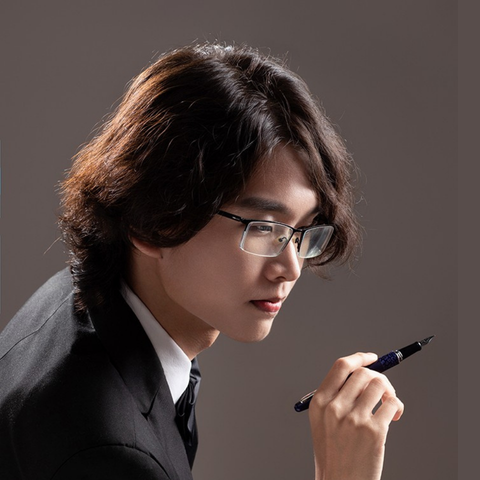
Ruan Trio Fire Dragon Dance Lau Cheuk-yin
The Tai Hang Fire Dragon Dance originated from a century-old tradition in Hong Kong of warding off plague and bad luck. On Mid-Autumn Festival night, a 67-meter-long dragon covered with burning incense is carried by 32 dancers through the streets. Lighting tears the night sky, like the descent of a fire dragon, bringing peace and good luck to the community.
This piece is based on imaginative tales of the fire dragon descending from the divine realm. The dragon vividly comes to life, ridding the world of plague and bringing peace to its people so that the nation thrives and the people live in safety.
The piece is divided into six sections:
A. Awakening of the Fire Dragon
A steady, singing-style melody, enhanced by a rubato tempo, embellishes the fire dragon, gradually awakening in the vast sky.
B. Descent to the Mortal RealmThe rapid rhythm and continuous melodic theme evoke the fire dragon’s descentinto the human world after a long journey, bringing relief to the people.
C. Pestilence Approaches
The incoherent rhythm and chaotic melody depict the arrival of a fire dragon on the mortal world. This depicts the devastation and ruins of the people after a plague, a sign that the fire dragon is poised to dispel the plague.
D. The Dragon's Night Parade
The sudden change of theme and the surging rhythm - like a dancing fire dragon donning armor, spreading fragrance, begins to dance on the road, casting tiny wisps of ash.
E. Dance of Rebirth
The piece's accelerated sections, with their complex and distinctive instrumental techniques, breakneck tempo, and speed, resemble a fire dragon beginning to dance. It brings hope and fills people with energy as if reborn.
F. Ascension of the Fire Dragon
A vibrant and energetic ending, like the people solemnly bidding farewell to the fire dragon as it departs, concluding with a perfect cadence.
Noiseless Quartet for Three Huqin and Gehu Li Alex Kelvin
Noiseless is a quartet for three huqin and gehu, inspired by the accelerated urban rhythm of the Greater Bay Area. Amid high-density construction, relentlessly advancing infrastructure, and the constant circulation of people, an intense, taut urban energy takes shape. Beneath the façade of prosperity, pressure, competition, and anxiety continue to accumulate. The work seeks to capture the states of compression, collision, and overflow embedded in the emotional landscape of contemporary metropolitan life.
Driven by an eruptive swell of sound and the threshold of sensory endurance, the four bowed instruments intertwine, confront, and overlap. Through extended techniques and parched, fractured timbres, the music constructs a language akin to an urban torrent of noise—at once chaotic and clamorous, yet also a silent scream. The piece further incorporates a chant-like melody reminiscent of Hildegard’s style, elusive as smoke and dream. Within the interwoven textures, the performers persistently trace this line, as if driven by an instinctive yearning for release—an unceasing desire for breath, healing, and a fleeting moment of stillness amid the city’s unrest.
Hong Kong Guide Suite (excerpt) Chan Nga-man
The first movement: Ming Kum Road
The third movement: Circular Pathway
The suite Hong Kong Guide is themed around four streets in Hong Kong, each depicting the unique characteristics of the its areas. The entire piece is based on a motif consisting of five notes, which is presented in various ways across four movements. The names of these streets each contain a category of Chinese musical instruments: winds, plucked strings, bowed strings, and percussion. The four streets were originally coastal, but due to land reclamation, the coastline has now receded from them. Throughout the piece, percussion instruments mimic the sound of ocean waves.
First Movement: Ming Kum Road
This movement focuses on plucked instruments, especially the yangqin. Ming Kum Road is located in Tuen Mun, surrounded by mountains and rich natural landscapes. Tuen Mun was an ancient military base, named for its meaning "gate of stationed soldiers." Local residents historically relied on fishing for their livelihoods, and the San Hui (Xin Market) was the main marketplace at that time. Today, Tuen Mun is characterized by its light rail and natural landscapes. This movement portrays a serene, solemn, yet lively scene. The end of this movement connects to the second movement: Wo Tik Street.
Third Movement: Circular Pathway
This movement centers on bowed string instruments. The music creates a tranquil and simple atmosphere filled with an ancient charm. The interplay of gaohu and erhu resembles a dialogue between two lovers. Circular Pathway, located in the Sheung Wan area, now seems quiet due to its inconspicuous location. The music transitions from quadruple time to triple time, symbolizing how local development has gradually fragmented Circular Pathway and reduced its scope.
Bauhinia Chan Lok-tim
This piece is inspired by the Bauhinia, the vibrant flower that symbolizes Hong Kong. With heart-shaped leaves like butterfly wings and petals reminiscent of orchids, it carries a gentle fragrance. Yet it cannot thrive alone—it depends on human care and connection to continue blooming.
The Bauhinia’s life cycle reflects the fleeting yet radiant nature of beauty. When it first sprouts, its lively “clever leaves” symbolize wisdom and good fortune. In full bloom, its asymmetrical elegance suggests movement, harmony, and flowing energy. Though the petals eventually fall, they leave behind a lingering scent in memory. It is an echo of smiles through tears and unspoken emotions. Yet this is not an end, but a quiet continuation of life’s resilience.
The music begins with a sense of fragility and grace, gradually building in strength and vibrancy, mirroring the spirit of Hong Kong: resilient, dynamic, and full of life. Through the Bauhinia’s quiet strength, its gentle dependence on the environment, and the warmth of those who help it grow, the piece explores how we face life’s challenges—with sorrow touched by beauty, and a deep inner warmth.
Chanticleer Chen Shuaike
In Lingnan culture, the "rooster" is not only a vital element in culinary traditions but also carries profound connotations of auspiciousness and good fortune. The Chineseorchestral piece Chanticleer draws its inspiration from the "rooster" as a central motif, with its creative roots tracing back to the traditional Guangdong folk song Selling Rooster Tune. This melody originated from an ancient folk ritual, in which Taoist priests would placed a rooster atop the tip of a sword while chanting the tune to ward off evil and invite blessings. The composition extracts the core "Yifan Mode" pitch series (G–B–C–D–F) from Selling Rooster Tune and transforms it into a recurring "rooster" motif that permeates the entire work. Through techniques such as recombination, reordering, and juxtaposition, the motif is developed and varied within the rich orchestral texture. The piece not only represents a contemporary reimagining of ancient folk music but also tenderly conveys people's heartfelt aspirations for a brighter life.
Tin Hau’s Tunes (excerpt) Hua Wenyao
Tin Hau, also known as Mazu, is the goddess of the sea in ancient Chinese legend. Tin Hau's Tunes represents the mysterious charm of Tin Hau and her blessing to fishermen. The inspiration for this work comes from the Tin Hau temples scattered across Hong Kong. These temples not only represent the humble faith of fishermen but also serve as enduring symbols of safety and guardianship in their hearts. Tin Hau's Tunes rises and falls like ocean waves—gentle yet mysterious—accompanied by the sounds of rituals that honour the sea and the struggles against turbulent waves, as if narrating the ocean’s stories.
The piece is divided into eight chapters:
1. Awakening Tide, Morning Light
2. Drums of Dragons
3. Thousands of Sails
4. Hidden Whisper
5. Thunder's Shatter, Heaven's Scatter
6. Illusion Frozen
7. Tears of Pearl
8. Voyage Homeward